Category: Blogs

  • Earn £100,000 + For Your Book

    by Jay Jones, Entrepreneur May 2013

    Every writer fantasizes about getting that big fat advance so they can take a little dream time, write, relax, or put their kids through college. But what most writers don’t know is it takes a heck of a lot of work to get to the point of being good enough for a publisher to hand you a golden egg. Whether you’re a doctor with the latest slim fast diet or a mum who has a foolproof way to turn terrible tots into angels, you must be willing to do the work – a lot of it.

    What separates the six-figure advance earners from the mid-list authors are two things.

    1. They think of their book as a business.
    2. They have a huge built in audience.

    Think of your proposal as the business plan for your book. Your book is an integral part of your overall career which includes speaking, products, and more books. Authors are constantly in search of ways to expand their audience.

    Agent David Hale Smith of DHS Literary, (he represented New York Times Best-selling author Cheryl Richardson) says he wants his authors to be financially independent people who see their book as part of a larger successful career. These are qualities he and other agents and publishers look for in their budding celebrities.

    From my own experience media coaching and creating marketing plans for authors who get six figures I’ve found that they do three things right.

    1. Six Figure Authors React Instantly.

    When I asked Rich Fettke, author of *Extreme Success* to prepare the answers to the questions he thought he’d be asked by editors he was flying to New York to meet, he had them ready the next day. And yes, often editors want to meet you-if they think you’re going to be their next golden boy or girl.

    This instant reaction reflex comes into play later when your publicity begins. When an author’s topic is hot, they’re often asked to jump on a plane at a moment’s notice to appear on TV, radio, take a print interview or speak at an event or charity function. If you hesitate, the opportunity vanishes.

    Publishers who have invested the big bucks in you won’t stand for it. And rightly so. You have an obligation to them to earn back that hefty advance (which sadly, most authors don’t).

    2. Six Figure Authors Speak.

    Gone are the days when writers can cozy up in their garrets and write. To be a successful author today you must become a public person, and more than that, an entertaining one.

    A major publishing house hired me to media coach one of their rising star authors. Her book was getting major national press-but she was dull. And they were worried that her lackluster personality would effect her book sales. We worked until she got comfortable on camera while speaking vividly in 15 second soundbites.

    3. Six Figure Authors Get Media Coached.

    With some media coaching you can morph into a mediagenic maven. But it does take practice and sincere commitment. If you can’t afford a media coach, get out that video camera and do mock interviews with friend. A lot can be revealed and ironed out just by seeing how you appear to others on the big screen.

    That said there are 5 critical elements that determine the size of your advance.

    • Your platform.
    • Your endorsements.
    • Your publicity plan.
    • Your sample chapter.
    • Your audience.

    4. Your platform.

    When I interviewed editors at top New York publishing houses like Simon & Schuster & HarperCollins they told me repeatedly that the most important thing a writer can have today is a strong *platform.* A platform is a plan of how you are going to reach your audience to sell books.

    Prove you have a following. Publishers want to know who has bought your books or products in the past–and they want to know how many. Can you show that you have a track record of selling your goods to people across the globe, or at least in your community? Maybe you’re not as far along in your career as one of my clients who is a $12,000 an hour speaker who put in his proposal the fact that his audiences range from 100-10,000 people, and he speaks 250 times per year.

    His speaking bureau typically sells his video and audio tapes to those audiences in advance when they book his talk. What you want to show is how you can secure sales in large quantities to people you know will buy from you-because they have bought already. Or how audiences similar to the ones who have purchased are primed to buy your book.

    5. Your endorsements.

    To instantly establish your stature put these accolades on page number one so they’re the first thing an agent or editor sees. Endorsements need to be from celebrities, best- selling authors and well-known experts in your field.

    Show that you’re respected in the world. Endorsements show that high-level people believe in you, that you’re a good bet. They also go on your book cover jacket and help sell your book-and in today’s competitive marketplace it’s essential. Don’t say you’re *actively seeking endorsements.* Leading with the endorsements makes sure an agent or editor gets that you’re a big shot-or soon will be.

    One secret that many authors don’t know is the best blurbs are written by the writers themselves. Don’t expect famous people to read your tome. They don’t have the time or the desire. And please don’t send your book to them unsolicited. Ask permission. Then do the work for them and ask them to sign off on that perfect gem-the one you’ve written-touting the marvels of your work.

    3. Your publicity plan.

    Publishers are looking for people who know how to promote themselves and will take responsibility for doing it themselves.

    Map out your strategy for selling books. Are you giving keynotes, seminars & workshops to hundreds of people every month? How many people subscribe to your online newsletter, visit your web site, buy your products? Do you have big name clients who will host seminars at their companies for you where you’re guaranteed to sell books?

    4. Your sample chapter.

    *Once you’ve established that the author has some sort of a platform, that they have some voice in the world beyond their circle of friends, I go straight to the sample chapter,* says Kelly Notaras, a Senior Editor at Hyperion.

    Prove you can write. *I want to know if they are a good writer, because an agent can tinker away with the rest of the proposal and make it sound really good,* Notaras says.

    What if you’re not a great writer? Hire a ghost writer. Remember platform is non-replaceable. You, the personality, the presence, is what publishers are investing in. Good writing can be bought. Star quality can’t.

    5. Your audience.

    Prove you have a media track record. Who knows you already? What magazines have your written for or appeared in? What TV and radio shows have you been a guest on? Are those producers aching to get you back on their shows as soon as possible? Do you have established relationships with them? You guarantee to a publisher that you’ll reach your audience by showing who you have successfully reached in the past.

    If you haven’t done much media and aren’t yet well-known in the public the quickest way to do so is to join PR Leads, (a service that reporters and producers use to send out queries (requests) to interview experts for stories they’re working on.)

    They are typically on tight deadlines so you need to respond as soon as the queries hit your email inbox. As founder Dan Janal says, *Reporters don’t care if you work for a Fortune 500 company. If they need an expert and you can show them you are one, that is all they care about.* Using this service you can become an instant expert in a matter of weeks and build your platform in short order.

    Once you can say you’ve done a lot of media and you plan to do more of the same type of media you’ve had success with in the past, you’ll be on your way to creating an impressive impression-one that says that you’ve got 6 figure author potential.

  • Book Promotion Woes?

    Too many new authors believe that once their book is written the sales will just come pouring in and they will make a bundle. Sadly, this disillusionment is shattered when they receive a royalty check. The honest to goodness truth of the matter is that the writer’s work is only started when the book is released. Even the huge author names of today began by peddling their books out of the back of their car.

    Many big-name authors also began by self-publishing because no one recognized their talent. They did not start off their career with a huge bang. They did not have the money to afford publicists and big marketing firms when they started out and yet they are super successful now. Take heart from their examples.

    Marketing, promoting and networking must be done every single day, for the life of the book, in balance with your other activities and obligations.

    Many new authors feel their only way to success is through book signings and bookstores stocking their book. They are wrong. While in larger centers with good promotion a book signing event or book reading event may result in as much as a couple hundred one-time sales… most smaller venues can only expect less than 10 sales. Is this worth the 2 hours or more that you spend at the event? Not counting all the preperation, marketing the event, promotion materials, time taken from work and any displays that you have designed and possibly paid for ahead of time. These events do not pay authors to host an event so any sales they do have may not even cover the traveling costs, hotel cost, meals, parking or supplies – let alone the time they put into it. Nor do they usually result in long-term sales – sales are often only during the few days around the event.

    Bookstores can only realistically stock less than 1% of the 3 million books available on the market. Their discount with the publisher/distributor is large. Authors are paid royalties only on what their publisher has recieved. So is all the time and effort going into attaining spots on bookstore shelves worth it?

    While the markets above are valuable and important to any author – what authors need to do is think outside the box. Figure out where your efforts will bring the greatest results. Don’t expect immediate and overwhelming acceptance by the media or your audience. Marketing, networking and promoting are long-term efforts that will reap greater rewards as efforts continue.

    Many authors live in tiny towns and hold down jobs or have physical limitations that prevent out-of-town promotions; much like ourselves. This can be overcome. Again, think outside the box, use the Internet and your contacts – and be persistant. Newspapers, libraries, and bookstores are only the most obvious markets and also are the most difficult to gain the attention of without a strong image because everyone is vying for their attention. Work on your image and get strong promotion materials that help you stand out among the hundred thousand or more new books released annually.

    So develop a long-term marketing plan and stick with it for the full term of your contract with the publisher. The market plan will grow and change as time goes on. And keep good records so you can determine how you will go about marketing the next book.

    I just wanted to mention here that some authors get overwhelmed by the immense amount of effort it takes to market a book. If we take one day, one step at a time we will find it is not so overwhelming. I find it works best to figure out what you will concentrate on this week and then set a goal for today. I do this nearly every day. It helps me keep a steady pace going, without taking on too much or too little.

    Remember too, that efforts you are making today may not reap immediate results. You may have to hit a market several times before they pick up your proposal. For instance, some contacts from nearly a year ago are now resulting in promotions in their publications. So be patient and professional in all that you do. Again, keep records so that you can follow up.

    Newsletters can be small but effective markets for your work. On average, they can range in size from 1000-17,000 readers or more. E-zines typically reach an audience larger than 5000. Get a few of them in one month and you are reaching a wide audience! You don’t need to be rich or famous or have a publicist if you are determined and able to committ effort every single day. (Do take some time for yourself, though!)

  • A Picture is Worth A Thousand Words

    The interior and exterior of a book is very important. A well placed layout of a book makes the book easy to read and sends a message to the reader.

    What exactly can you do to boost your ebook sale by as much as 268%? Nielsen BookData Information service provides market leading data services to more than 100 countries worldwide. The company collects book information from over 70 countries (including the UK, Ireland, Europe, Australia, New Zealand, India and South Africa) and works closely with the leading data providers in the US to provide consistent and comprehensive global database of title records. What Nielsen found in their Meta Data White Paper that books perform up to 268% better –  if you have appealing cover art and images in meta data. Nielsen has gathered thousands and thousand of empirical evidence which  shows how crucial and fundamental images are to your profit. High quality images are key.

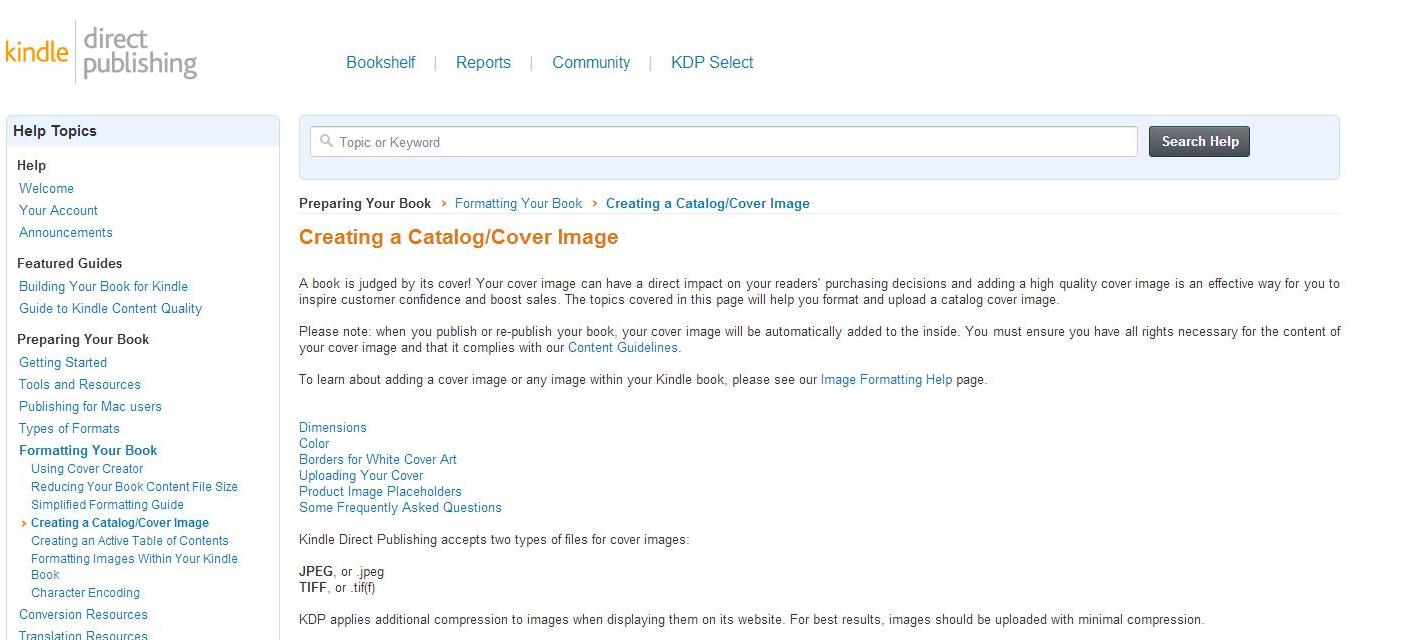
    Amazon echo’s this in their product upload section stating the following:


    kindle snipped - book cover


    THE MOST IMPORTANT PIECES OF THE PUZZLE

    romantic


    1)You need a high resolution jpeg. This is what most retailers will accept.

    Look how the book cover at the left just jumps out at you. This not only matters with your electronic books but also for the print versions of your book.


    The basic in book cover art starts with an understanding of how peoiple read at a book stand. People generally read:

    • The first few pages
    • Table of contents
    • Back cover
    • Side Flaps (Back & front)

    2) Your back cover is the most important element for your print book. This also needs to be high resolution.Ensure you have added:


    • Author Picture
    • A Brief Synopsis of Your Book
    • About the Author of Your Book
    • Expert Reviews if You have Any


    Ensure That You Have Covered These 10 Basics For Your Book Front & Back Cover

    1. All Images Are At Least 300Dpi
    2. Images Are Unique and Eye Cacthing
    3. The Cover Uses AT Least 2 Primary Colours (the picture above uses black and yellow)
    4. Images Reflect The Title
    5. Images Are Consistent for All Formats (paperback, ebook , etc)
    6. Images Need To Stand Out From The Crowd
    7. Must Be Easy To See Even As A Thumbnail
    8. Must Include a Spine Colour Or Text (Unless it is a small book with no spine)
    9. Must Not Exceed The Bleed
    10. MAKE IT JUST LOOK AS GREAT AS THE BEST LOOKING BOOK IN YOUR GENRE


  • The Skinny On How To Write A Great Book Title

    Go into a book store and browse through the titles in the best-seller section. Book publishing companies hire high-priced people to come up with a title or “headline,” because book publishing is a big business; therefore a lot of contemplation goes into making their titles as commercially-viable as possible. Many well-known and highly successful books started out with other titles. According to Dan Poynter, the father of self-publishing:

    • Tomorrow is Another Day became Gone With The Wind.
    • Blossom and the Flower became Peyton Place.
    • The Rainbow Book became Free Stuff For Kids.
    • The Squash Book became the Zucchini Book.
    • John Thomas and Lady Jane became Lady Chatterly’s Lover.
    • Trimalchio in West Egg became Fitzgerald’s The Great Gatsby.
    • Something that Happened became Steinbeck’s Of Mice and Men.
    • Catch 18 became Catch 2

    While you are in a book store, notice how the other browsers pick up a book, scan the front and back cover, and then put it down again before going on to another book. The whole process takes about two seconds. That’s all of the time you have to make an impression on a potential reader. In those two seconds, you need to appeal literally to three of the five senses: sight, speech, and hearing, and figuratively to the last two, touch and smell.

    1) Sight: When someone first comes in contact with your book’s title, it is usually by seeing it on the front cover. So your title must be aesthetically appealing. Fonts need to be neither too small or overpowering and there needs to be a synergy between images and text.

    2) Speech: If people can’t easily pronounce the words in your title they will assume that the rest of the books is also full of unpronounceable words. Even if you are writing only for family members and friends, and you are giving away your book for free, there is still an element of marketing.

    3) Sound: Business philosopher Jim Rhone says in order to have effective communication, you must “Have something good to say, say it well and say it often.” Your title will be heard often, but will it be good and will it be said well?

    4) Touch: Touch also means to “relate to” or “to have an influence on.” Figuratively, your title must allow itself to touch or be touched by being able to relate to your readers or have some type of influence on them.

    5) Smell: Your title should figuratively give off an aroma. In other words it should project “a distinctive quality or atmosphere.” If the title gives off a suggestion that very little thought or concern was given to it, people will assume that the rest of the book is the same way (this applies to the entire book!).

    On a recent Publisher’s Weekly Best-seller list, out of 20 books, one had a one-word title; five had two-word titles; four had three-word titles; five had four-word titles; three had five-word titles; one had a seven-word title and one had an eight-word title. The point is, most professionals in the publishing business believe that the simpler/shorter the title, the better. None of the titles in the Best-sellers list were complex.

    .

  • Can You Afford To Publish Your Book?

    Money blinds. It’s as simple as that. Aspiring authors ask about the money issue all the time, in varying forms, (How much does it cost to publish? How much will I get paid in royalties?, etc.) but they can’t see beyond that issue to think about the thing that will truly decide the money question. And here it is: What Do You Want From Your Book?

    What Do You Want From Your Book?

    That is the real question! Once you are clear about what you want out of the publishing process, you can decide what route would be the most satisfying–and profitable–for you. When it comes right down it it, you can spend as much or as little as you want on your book. But how much are you willing to spend to get what you want?

    When you aren’t clear, you can make poor decisions that won’t line up with your goals. For instance, many authors have a goal of making a lot of money, but they won’t consider self publishing. The fact is that unless you can immediately sell on the level of an Oprah’s Book Club selection or a James Patterson or a Dan Brown, it’s going to take a very long time before your royalties add up to much. When you self publish you take on risk, but you stand to gain much more because you get to keep all the profits (unless your agreement with the publishing company you use is a royalties-based one).

    Another strong reason to self publish: you can use your first book to build your platform for a bigger deal with a traditional publishing house in the future. Again, you can choose the self publishing deal that’s right for you. A print on demand company such as Xlibris charges just $500 for a basic package where you can get your book produced and copies made as they are ordered–so no inventory. Of course, when you pay more, you get more: better design, distribution services, maybe even some marketing help.

    The Traditional Road

    If your dreams of authorship include larger audiences and the literary status that comes of being published by one of the many arms of Random House, Warner or Simon & Schuster, that’s fine–just know that this route isn’t exactly free either. No, you don’t have to pay a traditional publishing house and yes, they do everything for you (design, distribution, some advertising and marketing), but these days a writer is expected to spend a little too on promoting the book. Many writers are even putting the amount they’ve set aside in their book proposals. If you’re serious about marketing your book, you’ll need to set aside at least $10,000. That amount can go as high as $30,000 depending on the amount of travel and other advertising you intend to use.

    Smart Money, Dumb Money

    Once you understand what you want out of your book, you’ll not only know how much you’re willing to spend, you’ll also know better how to spend it. You can spend it smart or you can spend it dumb. Many writers spend it dumbly because they don’t know what they want. If you’re spending money on educating yourself about publishing, improving your writing skills, hiring a good editor or book consultant, and marketing that will help you reach your specific, targeted reader, that’s all smart money. You will get more out of those dollars than if you had never spent it at all. You are investing in your writing career.

    But if you spend money because someone told you this is “the only way you’ll ever get this book published” (and you haven’t researched any other ways), or buy advertising simply because it’s where other books are advertised, or go to writer’s conferences with no clear plan of what you want out of them, or pay agents “reader fees”, or pay editors whose work you don’t know or whose references you haven’t checked, that’s dumb money. You’ll put those dollars out there and see little or no return.

    So I guess the bad news is publishing isn’t free. The good news is you have a choice as to how much you spend and where you spend it. Be an educated consumer as well as an educated–and talented–writer. You’ll find that to have a book published in the way you want it published is still in the end–priceless.

  • Consider Self Publishing In Ebook Format

    Today, more than every before authors are presented with publishing opportunities that have never existed before. This is not to understate the hard work that authors have to go through to get recognition, write great books, and make a full time living from their passion of expression. However, it is to say that today, due to advances in communications technology, authors can now get their books distributed much easier than they could a decade ago.

    One very popular way that authors are distributing their work is digitally through ebooks. Digital books are gaining so much popularity that even some of the most popular authors in the world have used it to distribute their books. Stephen King for example published “Riding the Bullet” exclusively in ebook format. When this ebook began distribution over Barnes and Nobel and Amazon.com there was so much demand for the download that the servers of these two book giants slowed down almost to a halt. People that wanted to download the ebook were put in a large queue with the hundreds of thousands of other who downloaded the ebook as well.

    It’s not only big name authors that are finding success in ebooks. We at Ebook Architect have been helping authors create, market and sell their ebooks online for years now with great success. Many of these people are first time authors and are often amazed with the success of their ebook sales. Below are some of their ebook writing tips.

    Don’t underestimate the power of the Ebook

    Ebooks are still looked upon as unpopular by many authors who have not yet taken the time to learn about the success within this industry. For example, while the traditional publishing industry growing at the sluggish rate of 5% a year the digital publishing industry is growing at rates between 30% -50%. This means that the opportunities within the publishing industry are growing at a fraction of the rate that opportunities within the digital publishing industry are growing.

    To set up an ebook you don’t need to be a tech wizard

    Setting up your ebook from the idea conceptualization stage to the selling stage can’t be completed overnight but it is definitely something that can be done by anyone regardless of your technological background. If you can use a word processor then you can create and sell an ebook online. While it is recommended you set up your own website, it is not necessary. There are outlets such as amazon.com, EBay and Lulu.com to name only a few sites that allow you to post your ebook on their servers.

    Setting up an Ebook site is virtually costless and you keep 100% of the profits

    With traditional publishers you’ll be lucky to see 10% of the profits from your book. With ebooks however, you keep 100% of the profits minus the fees required to set up the site which are minimal. Here is the fee breakdown for ebooks vs traditional books

    Ebook vs Book cost

    Ebook = Free to create an unlimited number of copies
    Book = Approximately $1500 for 200 copies of a 200 page soft cover book

    Rights and profit

    Ebook = You keep 100% of the profits and rights to your ebooks
    Book = You get 10-40% royalty (usually about $2-$5/ book)

    With the above examples it is easy to see that for first time authors ebooks make a lot of sense. The risk associated with publishing an ebook is much lower than it is with distributing a soft or hard cover book. Likewise, as an ebook author you’ll keep virtually all of your own profits.

    If nothing else, it is something worth consideration. Ebooks may not replace traditional paperback books, but they certainly are gaining popularity at a rate that should make all authors stop to think about how they could use ebooks to their advantage.